Category Archives: Announcements

Announcements from the MN Break the Bonds Campaign.

FOR IMMEDIATE RELEASE HUMAN RIGHTS ACTIVISTS DELIVER PETITION DEMANDING SEC DISCLOSE ISRAEL BONDS FUND ILLEGAL SETTLEMENTS

Contact: Sylvia Schwarz at 651-485-5269 or Robert Kosuth at 218-724-4800.

FOR IMMEDIATE RELEASE: HUMAN RIGHTS ACTIVISTS DELIVER PETITION DEMANDING SEC ENFORCE DISCLOSURE RULES ON ISRAEL BONDS

Palestinian rights activists are calling on the Securities and Exchange Commission (SEC) to enforce U.S. law in the sale of Israel Bonds, the latest attempt by human rights groups to ensure the U.S. government is implementing its own policies concerning Israeli actions.

On Tuesday, January 19, 2016 activists from Minnesota Break the Bonds (MN BBC), the US Campaign to End the Israeli Occupation, Jewish Voice for Peace, and US Palestinian Community Network delivered a petition to the SEC signed by more than 6,400 people demanding the agency implement an existing law that requires a seller of securities in the United States disclose all material facts about the security to potential investors.
The petition contends that by failing to disclose to investors that money received from the sale of Israel bonds is used for projects that violate international law, the Development Corporation of Israel (DCI) is withholding facts that would cause a prudent investor to make a different investment decision.

“The US government has a responsibility to enforce US laws. It is longstanding US policy that Israeli settlements built on stolen Palestinian land are illegal and a major obstacle to peace so how can the SEC allow investors to unknowingly invest in these activities?” said Robert Kosuth from MN BBC, which started the petition and has campaigned to have the State of Minnesota dump its multi-million dollar pension fund investment in Israel Bonds.

Money received from the sale of Israel Bonds is deposited into Israel’s pooled General Treasury accounts, which are used to fund projects such as building settlements, illegal under the Fourth Geneva Convention, and constructing the separation wall, declared illegal by the International Court of Justice in 2004. The DCI omits these material facts from its prospectuses and only states that the money is used for “general purposes of the state.”

Earlier this month DCI announced that it had surpassed one billion dollars in US sales for the third year running. The largest institutional investors in Israel Bonds in the United States are state and municipal employee retirement funds. MN BBC believes that it is unlikely that any public fund fiduciary who is properly informed of all material facts about the use of Israel Bonds would invest public funds knowing that the money will be used to violate international criminal law.

“Retirement fund managers who purchase securities knowing that the funds will be used to violate international criminal law are in breach of their fiduciary duties,” Robert Kosuth said.

The SEC has not yet responded to the petition.

The Israel Bonds issue is only one example of how the United States fails to clamp down on funding for Israel’s illegal activities. In December Israeli newspaper Ha’aretz detailed how US donors had given settlements more than $220 million in tax-exempt funds over five years. A group of American citizens filed a lawsuit on December 21 against the US Department of Treasury seeking to stop nonprofit groups from sending donations to support settlements and the Israeli army.

“The US government keeps insisting that it seeks peace between Palestinians and Israelis but continues to allow Israel to act with complete impunity. It is long past time for the United States to end its complicity in the denial of Palestinian rights and a major step would be to end the material support Israel receives to continue its policies, support that violates US laws,” said Ramah Kudaimi of the US Campaign to End the Israeli Occupation.

###

MN BBC Interactions with the State Board of Investment Thus Far

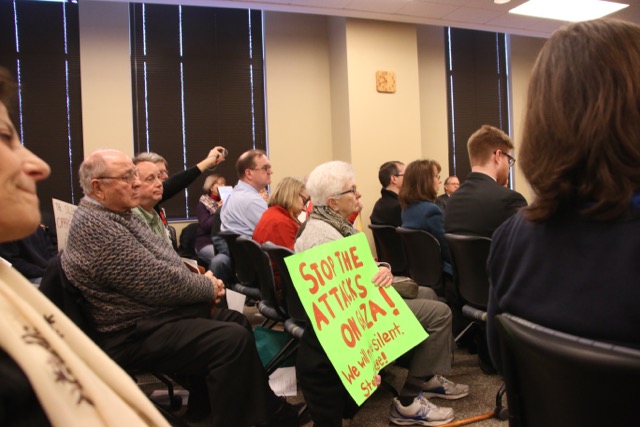
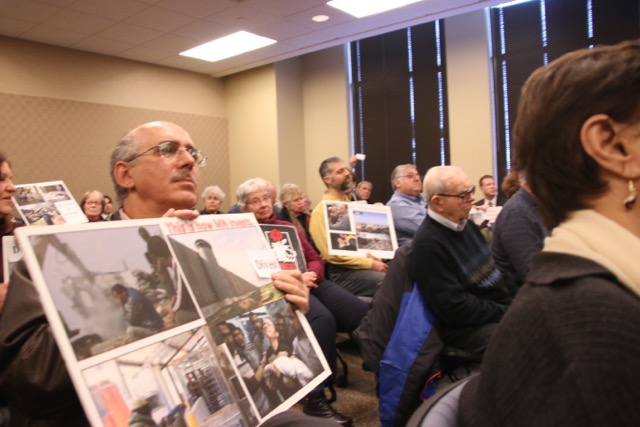
Minnesota Break the Bonds Campaign (MN BBC) members and supporters attended the quarterly State Board of Investment (SBI) meeting on March 4, 2015, as we have for almost all quarterly meetings for more than three years. More than 50 supporters packed the room holding signs that encouraged the SBI to divest from the Israel Bonds that it holds. More supporters were turned away from the overcrowded meeting room, held in the State Board of Investment offices, rather than its usual meeting place of the Capitol building, due to renovations at the Capitol. Also in attendance were two members of the Jewish Community Relations Council (JCRC) of Minnesota and the Dakotas.

Former Senator James Abourezk of South Dakota spoke on behalf of MN BBC. He spoke about why Minnesota should not be investing in a country which commits human rights abuses and undermines US Foreign policy, backing up his statements with a history of Israel’s involvement in human rights abuses against both Palestinians and Americans. He was himself, the target of an attack because of his co-founding of the American-Arab Anti-Discrimination Committee, and his colleague, Alex Odeh was assassinated. Although the perpetrators of the murder were never brought to justice for that crime, Israel was clearly implicated.

It did not matter, however, what Senator Abourezk, a friend of Governor Dayton, said. The script for the day had been written in advance. For as soon as the opposing side from the JCRC spoke (Steve Hunegs spoke about the article that he and his friend Walid Issa wrote for the MinnPost, which said that Israel Bonds are a good investment and Israel has always repaid those bonds), Governor Dayton passed out pre-printed copies of his resolution calling for continuing investment in Israel Bonds. The decision had been made prior to the meeting. The debate that ensued did not discuss the issues that MN BBC had been bringing to their attention since the beginning of the campaign – that Israel uses the money from Israel Bonds for illegal purposes. Indeed, never in the history of our dealings with the SBI, have they addressed this issue, much less answered it to anyone’s satisfaction.

So even though this is an apparent loss to our cause, it is also an opportunity for us to step back and look at our strategies in all our interactions with the SBI. While MN BBC has been active in many other areas, this posting will discuss what we have done just with the SBI. It is not written in chronological order, but rather by topic, and hopefully will give activists in other states and municipalities techniques and ideas in executing their campaigns.

The struggle continues! We will not give up until all Palestinians are accorded their full human rights!

We address the SBI

In 2011 at least 30 MN BBC supporters from all over the state (from as far away as Luverne in the southwest and Brainerd in the north central), read statements to the Board during the public comment period of the SBI meeting. Governor Dayton thanked everyone for coming and listened patiently as everyone spoke.

Since that time we have addressed the SBI many times, always insisting that their investments in Israel Bonds are illegal and immoral. At one meeting a student intern stood to speak and Governor Dayton fast-gavelled a close to the meeting. This was a disappointment for the student who had prepared his statement and was looking forward for a chance to speak. We then wrote a letter to Dayton, informing him that his rude behavior had been a frustration to a student who was just learning about the political system. After that letter Dayton allowed speakers again.

Lesson: In an open meeting system, the public has the right to speak. We always (well, almost always) remained respectful and non-disruptive, so there should not have been a reason to bar us from speaking. Always insist on your rights under the US and State Constitutions.

We have conversations with the Executive Director and staff of the SBI

We began speaking with the Executive Director, Howard Bicker, and his staff early in the campaign. None of us at the time had experience in getting information from governmental agencies and we find that, because we didn’t ask the right questions, there were many details that Bicker never included in his responses to us (for example, that the Development Corporation of Israel thanked Howard Bicker personally for his “support of the State of Israel.” It was only recently that we learned this fact.) But we did learn some essentials about the Israel Bonds: date of maturity, approximate amount of investment, average rates of return, and the fact which the SBI continually tries to claim, that they do not invest based on politics, but only for fiduciary purposes. Yet this letter which Bicker received belies that claim, since investing in Israel is a political act.

Lesson: It takes time to know what questions to ask. Get to know your State’s equivalent of a FOIA request. In Minnesota it’s called a Data Practices Act Request (see below).

MN BBC files lawsuit

We brought a lawsuit against the SBI in December 2011. (You can read the complete documents here.) We alleged three counts:

1. That the SBI had invested in Israel Bonds contrary to state statutes 11A.24 subdivision 2, which restricts investments in foreign sovereign bonds to those of Canada and requires substantial restrictions on those investments. We alleged that the State of Minnesota violated those statutes for Israel only, again showing political solidarity with a country against its own stated policy of investing only on the basis of fiduciary duty.

2. That the SBI had invested in Israel Bonds with the knowledge that the money from the sale of those bonds goes into the Israeli treasury and is distributed to various ministries, some of which carry on illegal activities according to both US and international law. The United States is a signatory of the Geneva Conventions and therefore it is incumbent upon all states to comply with those international treaties. Investments in activities which violate ratified international treaties are illegal according to the US Constitution.

3. That the SBI had violated the “prudent person standard” of investment, exposing the state’s pensioners and taxpayers to potential lawsuits based on the harm caused by the international law violations.

The lawsuit was dismissed from the lower court and from the Appeals Court (November 2012) and the Supreme Court refused to hear the case. The court asserted that the SBI did have the legal authority to invest in foreign securities.
The important point which was not addressed is the fact that Israel uses the money from the sale of Israel Bonds for illegal purposes. This has not been disputed by the courts or the SBI.

Lesson: Don’t get discouraged by apparent losses. There were many avenues to go after this dismissal. We began to pursue the avenue that the SBI had violated its own investment guidelines.

We begin a postcard campaignSBI Post Card

The postcard campaign began about the time the lawsuit was filed. The front of the postcard shows pictures of desperation from the Occupied Territories, with the words “This is how MN invests.” The back had a statement saying that the undersigned urged the SBI to divest from its Israel Bonds. Whenever we received a number of signed postcards we delivered them to the SBI. No acknowledgment was given on their receipt.

Lesson: It is vital that the broader community continues to be informed, educated and involved about the campaign and its purposes. A petition or postcard campaign is a great way to involve and educate people.

We allege that they are violating their investment guidelines

In September 2013 we delivered a report to the SBI called Twenty Years of Failure – A Report on the MN State Board of Investment’s Neglect of Human Rights”. This White Paper pointed out that in the 1990s, then State Auditor (now Governor) Mark Dayton urged the SBI to adopt guidelines to include the consideration of human rights, labor practices and environmental practices in their investment decisions. Each country was to be categorized in one of three groups based on their human rights, labor and environmental records. A Group I country had the best record and investments could be made in those countries without restriction. Group II countries had laws protecting workers, but there were problems and fund managers who recommended those investments were required to make a statement that it would be a breach of the fund manager’s fiduciary duty NOT to invest. Group III countries had the worst human rights, labor or environmental records and the fund manager had to justify a decision to invest in that country. Israel had always been placed in Group II, yet no fund manager ever was required to make the statement that it would be a breach of fiduciary duty not to invest in Israel… until we filed the lawsuit. In June of 2012 the first statements appeared. However these statements did not exactly say that it was a breach of fiduciary duty not to invest in Israel. The best the fund managers could muster was to say it was a breach of fiduciary duty not to have a diverse portfolio.

We also noticed that countries did not change classification from year to year. The country review process, originally required to take place annually, had been skipped for several years. After a Data Practices Act Request, we realized that they had changed the review period to quadrennially, and finally quit reviewing countries altogether after 2005.

Since they had neglected their own requirement for country reviews, we submitted a Shadow Report which reviewed Israel’s human rights record based on the same categories that the SBI was supposed to have used. No response to either of these papers was received.

Lesson: Even though these are politicians who don’t care about human rights unless it will get them votes in the next election, we thought we could shame them for not even following their own internal investment guidelines. It didn’t seem to work, although who knows how they will react when suddenly they can support Palestinian human rights and not suffer political repercussions? We don’t know what will affect someone, so we have to approach it with different tactics.

We file Data Practices Act Requests

Howard Bicker retired in 2013 and Mansco Perry replaced him as the Executive Director. We have met with Perry several times also, and he continues the claim that they only invest based on fiduciary reasons. Perry, however, has been much more forthcoming with records than his predecessor, and we have filed several Data Practices Act Requests from him.
These requests included any written material showing decisions on changing the country review process to extend it to four years instead of annually, and changes to the internal investment guidelines. The guidelines did not change until March 4, 2015 in an important motion that was most likely overlooked by most of our supporters attending that meeting.
The internal investment guidelines had been implemented when Dayton was State Auditor, with the encouragement of several labor unions. That they had not been followed was not an issue for them until MN Break the Bonds insisted that they should follow their own rules on investing. So without attracting any attention to what they were doing, Perry announced that the guidelines were being changed. From now on, the country grouping no longer applies to anything but “emerging markets.” In other words, a developed country can commit whatever crimes against humanity it feels it needs to do and this will not prevent the SBI from investing in it. The SBI voted unanimously to adopt the changes.

Lesson: I already denigrated politicians – enough said!

We encourage them to not reinvest

We have consistently encouraged the SBI to divest from or not to reinvest in Israel Bonds. It is undisputed that the money from the sale of these bonds goes to illegal activities. We confronted the SBI with legal arguments and human rights arguments. We will not be deterred from seeking justice for Palestinians. March 4, 2015 was just another disappointment showing that the SBI, while claiming not to consider politics in their investment decisions, make the very political decision which will get them reelected. Even the fact that Dayton’s own guidelines had to be thrown out in order to make his supporters happy was not enough to make him question his support of an apartheid state.

Here is the wording of the resolution which the board voted on following Abourezk’s address:

The SBI declines to divest of its holdings in its bonds issued by the State of Israel and will continue to invest in the fixed and floating rate bonds offered by the State of Israel subject to a determination by the Executive Director that the rate of return is competitive, and that the duration, terms, amount and risk of the investment are consistent with sound investment practices and the prudent investor fiduciary standard of care in Minnesota Statutes 11A.09 and Section 356A.04.

In other words the SBI is letting Mansco Perry make the investment decision. If it’s a good investment, they all get complimented, if it’s a bad investment Perry may suffer some consequences, but the SBI will have made the politically expedient decision of showing solidarity with an illegal and inhumane regime.

Lesson: The March 4 meeting is not the end of the campaign. We continually find new arrows in our quiver! Stay tuned!

And Stay Human!

For an abridged video of the meeting on March 4, see: http://www.youtube.com/watch?v=eThLkKUV_-Y

MN Break the Bonds condemns the State Board of Investment’s decision and representation of Israel bonds

FOR IMMEDIATE RELEASE

March 5, 2015 — Minnesota Break the Bonds Campaign (MN BBC) strongly condemns the decision on Wednesday, March 4 by the State Board of Investment, as initiated by a motion from Governor Dayton, not to divest from Israel bonds, which are maturing on June 30, 2015. The motion came after a presentation by former South Dakota Senator and co-founder of the American-Arab Anti-Discrimination Committee James Abourezk urging the State Board of Investment not to continue to use state pension funds to invest in Israel because of its human rights abuses and oppressive occupation of Palestinians, and the Executive Director of the JCRC who claimed that Israel bonds are an important investment for Minnesota and that their rates are competitive.

After hearing the testimony, Governor Dayton put forth a motion calling on the SBI to “decline to divest” from Israel bonds so long as the bonds continue to return at competitive rates and not pose financial risks for the state, as per their fiduciary responsibility. The Governor remarked that he was behind the effort of the initial purchasing of the bonds and believes they are an important investment to maintain. Attorney General Lori Swanson questioned SBI Director Mansco Perry as to whether these bonds were financially lucrative, pose risks, and have rates similar to other bonds, to which he answered yes. The Board voted 3-1, with State Auditor Rebecca Otto voting no on the basis that she did not believe that the Board should weigh in on an individual bond decision or bring political considerations to an individual divestment decision. Otto’s statement affirms the assertion of MN Break the Bonds that the nature of Dayton’s motion and Israel bonds in general are indeed political. Break the Bonds estimates that since the bonds are general Treasury bonds, at least 20% of Minnesota’s investments are used for settlement activity in the occupied West Bank or towards other infrastructure maintaining the occupation. The occupation is illegal under international law and as such Minnesota is making a political statement by continuing to be invested in a military occupation in violation of international law.

Minnesota Break the Bonds Campaign challenges the claim that the state’s Israel bonds were purchased for fiduciary rather than political reasons. While the bonds may provide a small and reliable return, this is not the basis on which they are sold. The bonds were purchased as “solidarity bonds” which are sold privately by the Israel Development Corporation as a way to show support for the state of Israel, not for financial competitiveness. “Israel bonds are not prudent investments because they are not competitive; they are not liquid and even the Israel Development Corporation acknowledges that the return is not competitive,” says Karen Schraufnagel, economist and member of MN Coalition for Palestinian Rights.

MN Break the Bonds mobilized supporters in the last several months to call on the SBI to not reinvest in the $10 million bonds, which mature at the end of June. Through this effort they collected over 1,200 signatures from residents of MN calling on the state not to reinvest.

MN Break the Bonds has been calling on the SBI to divest from Israel bonds since 2008 in a broad grassroots campaign with several thousand supporters from around the state, including chapters in the Twin Cities, Duluth, Rochester, Morris, and Willmar. The Break the Bonds campaign follows the Palestinian civil society call in 2005 for boycott, divestment, and sanctions against the state of Israel until Israel complies with international law and enables justice for human rights violations against Palestinians. MN Break the Bonds calls on all supporters of human rights to continue demanding that the State Board of Investments stop investing in Israel bonds.

MN Break the Bonds is a grassroots campaign supported by Friends of Sabeel North America-MN, US Palestinian Community Network-MN, Jewish Voice for Peace Twin Cities, Women Against Military Madness, Anti-War Committee, Middle East Peace Now, and several other community organizations.

MN BBC to MN SBI: Don’t Reinvest in Human Rights Abuses!

Please come to the next quarterly meeting of the State Board of Investment on Wednesday, March 4 at 10:00 am in the State Board of Investment building, 60 Empire Drive, Room 106, St. Paul. (Come early and pick up a sign.)

Minnesota Break the Bonds Campaign (MN BBC) announces that former Senator James Abourezk of South Dakota (D-SD, 1973-1979) (US House of Rep., 1971-1973) will be addressing the quarterly meeting of the Minnesota State Board of Investment (SBI). “I intend to call attention to Israel’s repeated bullying by using money from Minnesota’s Israel Bond sales to kill, wound and imprison helpless Palestinians. I’m certain that Minnesotans do not intend that their hard earned tax money should go to the Israeli military’s brutalizing [of] Palestinian people,” says Abourezk, the first US Senator of Arab descent and the founder of the American-Arab Anti-Discrimination Committee, the largest Arab-American civil rights organization in the United States.

Comprised of Minnesota’s top four constitutional officers and chaired by Governor Dayton, the SBI manages the investment of Minnesota’s $74 billion pool of public employee retirement funds.

For more than six years, MN BBC has attempted to persuade the SBI to divest its holdings in Israel Bonds which are unrestricted loans to the government of Israel. Israel uses the money from the sale of Israel Bonds to construct settlements on Palestinian land and build apartheid separation barriers, including a massive separation wall, among other actions that violate international law. The SBI’s Israel Bond investments will be maturing on July 1. At the SBI’s September 2014 meeting, Governor Dayton announced that the board would consider whether to reinvest in Israel Bonds when it meets at its March 4 meeting.

MN BBC and its supporters are urging the SBI not to reinvest in Israel’s human rights abuses. In addition to Senator Abourezk’s appearance on their behalf at the March 4 meeting, MN BBC will be submitting a petition signed by over a thousand Minnesotans from many different backgrounds.

Because of his leadership role in a community organization that has advocated for the purchase of Israel Bonds, MN BBC has requested that Secretary of State Steve Simon recuse himself from the SBI’s decision whether to reinvest. The letter to Sec. Simon from MN BBC and the Midwest Organizer for Jewish Voice for Peace requesting his recusal can be seen here.

MN BBC Claims Sec’y of State Steve Simon has conflict of interest, must recuse himself

The new Secretary of State, Steve Simon, is also a board member of the Jewish Community Relations Council (JCRC) of Minnesota and the Dakotas. While active in this position, the JCRC has actively promoted the sale of Israel Bonds and worked against the efforts of MN BBC. The following letter was sent to the Secretary of State claiming that he has a conflict of interest and should recuse himself from decisions regarding the State’s purchase or renewal of Israel Bonds:

Ltr-Conflict-Simon-Short Version 201502

All Process, no peace

MNBBC at Capitol 2014The following article, written by MN BBC member Bob Kosuth, appeared in the Socialist Worker on February 11, 2015.

AMERICANS WHO follow the news but don’t know this issue thoroughly must be befuddled as to why these endless “negotiations” never produce results in spite of the relentless chatter about how the U.S. and the two parties so badly want to find a “two-state solution” to the conflict.

Of course, there are the stock answers in the U.S. media: “terrorism,” Hamas, and the Israelis having “no partner for peace,” among others. But there are much better answers than these, and the experience of Minnesota Break the Bonds in trying to get the Minnesota State Board of Investment (SBI) to divest its Israel bonds illustrates the nature of the challenges faced by those who seek a just and honest solution to this decades-old dispute.

The thesis presented here is simply that the two powerful actors in this three-way entanglement–the U.S. and Israel–simply do not want any agreement with Palestinians if it undermines their real, unstated goals in the region. For the United States, that means the maintenance of their ability to project military power in the region in order to control crucial shipping lanes and oil supplies. Even if the U.S. doesn’t currently need the oil itself, it desires to control the flow of oil, which translates into geopolitical power.

For its part, Israel claims to be interested in peace, but only on its terms, which put colonizing land and ethnic cleansing of Palestinians far and away above any other concern. The evidence is simple and clear: Since Israel’s 1967 takeover of East Jerusalem and the West Bank, the number of Jewish settlers has grown to more than half a million in places where Palestinians used to but can no longer live. Israel can get away with this because they get billions of dollars, weapons and political cover from the U.S. It’s an immoral and unholy alliance, and Palestinians pay the price.

None of this is to deny that acts of violence are sometimes directed against Israelis or Jews outside of Israel, as in the recent attacks in Paris. Such acts are to be condemned, and I unequivocally do so here. But we need to make two points. First, thanks to Israel’s massive firepower financed and supplied by the U.S., Palestinians suffer violence out of all proportion to what is suffered by Israelis. In the 2014 Gaza bombing and invasion, for example, more than 2,100 Gazans died, of whom 1,462 were civilians; 495 of those were children and 253 women. On the Israeli side, 66 soldiers and seven civilians died, typical proportions in these conflicts. The purpose is clearly to demand submission rather than establish a basis for negotiations.

Second, and more important, if the U.S. and Israel are so interested in peaceful negotiations, why do they constantly thwart any and every attempt by both Palestinians and the world community to bring the Palestine issue before the United Nations or International Criminal Court, even by the usually obedient Palestinian Authority? It was widely reported that both Ambassador to the United Nations Samantha Power and Secretary of State John Kerry, if not Barack Obama himself, lobbied governments on the UN Security Council to abstain so that the embarrassment of a U.S. veto could be avoided.

Nigerian arms were twisted particularly hard, and it would be truly amazing if the $692 million in U.S. aid to Nigeria were not part of the conversation. Indeed, the Israeli newspaper Haaretz gives Power special credit for having “crafted the president’s defense of controversial Israeli policies.” So much for the U.S. as honest broker. If Samantha Power had been representing the U.S. in the 1980s, she no doubt would have argued for “constructive engagement” in South Africa.

– – – – – – – – – – – – – – – –

UNFORTUNATELY, BUT not surprisingly, it has been no easier to get Palestine issues addressed in Minnesota than at the UN or in Washington, D.C. Since 2009, the Minnesota Break the Bonds Campaign (MNBBC) has been advocating for the divestment of the state’s millions of dollars in Israel bonds, unrestricted money which is used in the Occupied Territories for a whole range of illegal purposes like building Jewish-only settlements, demolishing Palestinian homes, and construction of infrastructure to allow passage to and from Israel proper for Jewish settlers only.

The Fourth Geneva Convention (Article 49) prohibits all such activities. When Minnesota funds activities that violate an international treaty or convention that has been ratified by Congress, under the U.S. Constitution this constitutes a violation of U.S. law. Because the SBI knows that the money Israel gets from selling its bonds is used for purposes that violate international law, it is financially complicit in those violations.

On these grounds, MNBBC brought a lawsuit against the SBI. As a recipient of a state pension, this author was one of the plaintiffs. In spite of the issues of international treaties and Geneva Conventions referred to above, the state court and appeals court saw fit to dismiss the case on the grounds that, among other reasons, the plaintiffs were merely in “a policy disagreement with the discretionary decisions made by the Legislature and the SBI.” In other words, the courts, much like Samantha Power at the UN, saw fit to sweep aside all the issues of this long history and simply embrace the unjust power relations of the status quo.

It’s not that the state hasn’t or can’t do anything. The SBI has divested from companies in Sudan and Iran based on laws passed in the State legislature. In 1985, acting on its own authority, the SBI established its own divestment policies for companies doing business in South Africa. Thus, both the state and the U.S. government can find reasons to do what they want to do and reasons to avoid doing what they don’t want to do.

More than 23 states and many municipalities and organizations own Israel bonds. Those pursuing divestment will surely encounter the same kind of obfuscation and duplicity that we have met here in Minnesota. The solution is a vigorous and visible grassroots campaign connecting the continued colonization and violence in Palestine with the contradiction of owning Israel bonds right in one’s own state or community. Jettisoning Israel bonds is a moral and political imperative. Not doing so would be nothing less than a violation of the public trust.

A previous version of this article appeared at MinnPost.

MN BBC Endorses the USPCN’s Boycott Coca-Cola Campaign #BoycottCoke

Minnesota Break the Bonds Campaign is proud to endorse  the US Palestinian Community Network’s (USPCN) Boycott Coca-Cola Campaign: #BoycottCoke. Coca-Cola has subsidiaries and bottling plants in illegal settlements in the West Bank, and is responsible for human rights abuses, ecological damage, and labor abuses.  The USPCN has called for a boycott of Coca-Cola and its 40-some products. Go to www.uspcn.org to read more about the Coke boycott and how you can take part in this action, or check out the campaign Facebook page at https://www.facebook.com/uspcncoke/


USPCN-Logo

No Coke


For the Children of Gaza: A Benefit Show – Sunday, August 17

MN Break the Bonds is co-sponsoring a benefit concern on Sunday, August 17 that is raising funds for humanitarian aid to Gaza through music and solidarity. The show runs from 2:00pm-10:00pm. Suggested donation of $15 at the door. Come and bring your friends & family! All proceeds will be sent to ANERA for their work on the ground in Gaza.

For more information, check out the event’s website at http://forthechildrenofpalestine.com/

Please consider making a donation to ANERA if you aren’t able to attend the event.


Minnesota Break the Bonds Member Publishes Editorial in Star Tribune

Editorial counterpoint: The other side of the Gaza story

By Sylvia Schwartz

http://www.startribune.com/opinion/268020311.html?src=news-stmp

I am the Jewish daughter of Holocaust survivors. I say this to emphasize that Jews do not speak with a single voice. I have spent considerable time studying Zionism (not to be conflated with Judaism) and the history of Israel and Palestine. This history is critical as it relates to the present.

Zionism is a political philosophy that calls for a homeland for Jews. The political movement was begun in the late 1800s by Theodor Herzl and led to the founding of Israel in 1948. Contrary to common perception, this conflict has not been raging for millennia. Jews, Christians and Muslims lived fairly peacefully together for centuries in Ottoman Palestine. The influx of tens of thousands of European Jews, escaping anti-Jewish pogroms, began pushing out the indigenous population. In 1948, 750,000 Palestinians were expelled from their homes in what the Palestinians call the Nakba (catastrophe) and Israelis call the War for Independence. Tens of thousands fled to Gaza, others to the West Bank or nearby Arab countries.

Gaza has been militarily occupied by Israel since 1967. Israel claims that withdrawal of its army and civilians from Gaza means it is no longer occupied. However, the legal definition of occupation is effective provisional control. Israel has absolute control over Gaza and its population.

Israel controls all of Gaza’s borders except that with Egypt. Israel controls Gaza’s sea and airspace. Palestinians are shot at when fishing more than 3 nautical miles from the coast, although the Oslo Accords allow 20 nautical miles. Israel posts snipers along the fence and maintains a 300-meter buffer area between the wall and Gaza’s land. This farmland lies fallow because Israeli snipers shoot and kill farmers there.

Israel controls all goods into Gaza, and since the siege began in 2007, disallows virtually all exports, thus destroying Gaza’s economy. Gaza has been a humanitarian disaster for years.

A recent Star Tribune editorial (“Hamas cynicism is the biggest threat to Gaza,” July 16) placed the blame of the current conflict solely on Hamas, exactly what the Israeli government wants Americans to believe. In fact, it so parroted the Israeli line that it could have been written by an Israeli government propagandist.

Israel claims (without evidence) that Hamas uses civilians as human shields, though many reports show that Israel uses Palestinian civilians as human shields.

Eighty percent of the victims of this attack have been civilians, and dozens have been children. The United Nations and other humanitarian agencies have accused Israel of war crimes.

Israel claims that it has a right to defend itself. I ask: Do not Palestinians have the right to defend themselves?

Israel has an obligation under international law to protect civilians. It is a violation of the Geneva Conventions to target hospitals and places of worship, yet hospitals and mosques have been destroyed.

This attack on Gaza is an extension of the Zionist project, one to ethnically cleanse Palestinians and replace them with Jews. In this scenario, all Palestinians become the enemy and therefore in Israeli eyes, all Palestinians are legitimate targets, babies and children included.

It is truly a tragedy that most Americans side with the aggressor in this conflict, although not surprising. The American people have been told only one side of this story. Only recently have the Palestinians become more successful at reaching Americans.

Public awareness of the facts is increasing. When Palestinian civil society called for boycott, divestment and sanctions (BDS) from Israel until it complies with international law, people all over the world, and increasingly in America, began to see how this nonviolent movement could bring about change. To date, universities and churches have divested from corporations profiting from human-rights abuses. Academic, cultural and consumer boycotts are spreading. These initiatives will pressure Israel to change its policies.

BDS has the potential to create justice in Israel and Palestine. For further information, contact the Minnesota Break the Bonds Campaign via http://mn.breakthebonds.org.